


In-Water Survey at Koh Si Chang Anchorage


MaxiDive completed an In-Water Survey at Koh Si Chang Anchorage, Thailand, for a commercial vessel requiring underwater condition assessment and technical documentation.
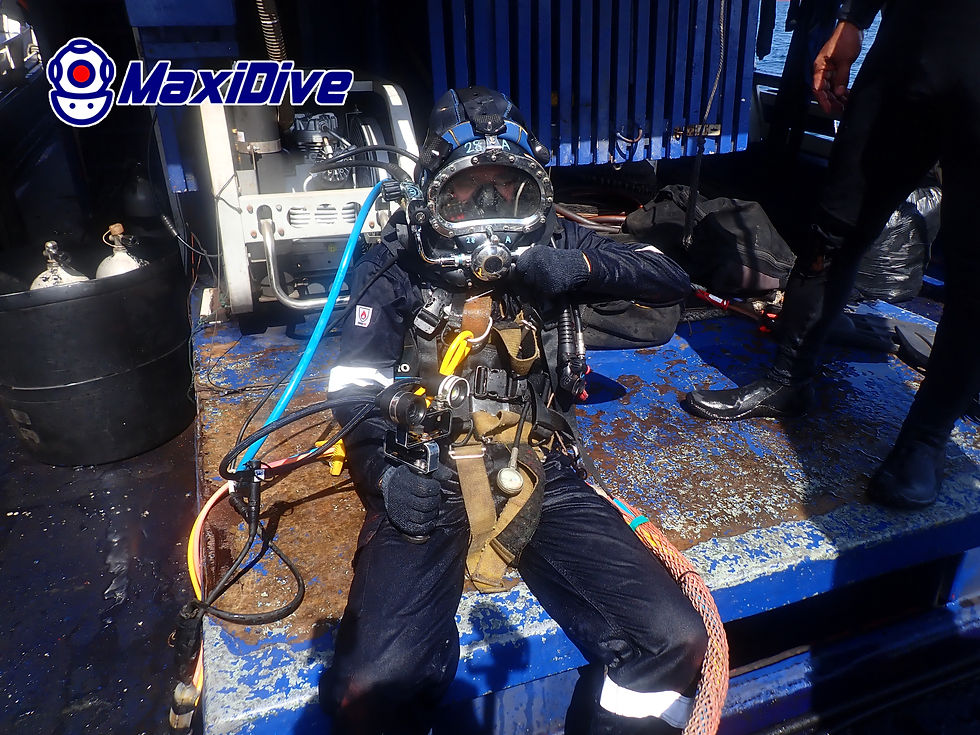
The work was carried out under calm sea state conditions with approximately 5 meters of underwater visibility. MaxiDive’s commercial diving team used an SSDS system and measurement tools to inspect and document hull plating, appendages, propeller assemblies, rope guard, stern tube and rudder assemblies.
In-Water Survey at Koh Si Chang Anchorage: Service Scope
The requested underwater work was focused on in-water survey support and underwater condition documentation. MaxiDive’s divers carried out visual inspection and measurement-related checks to support the vessel’s technical review while the vessel remained afloat.
The survey scope included:
underwater inspection of hull plating;
appendage inspection;
sea chest grating inspection;
discharge and drain plug checks;
bilge keel condition review;
sacrificial anode condition documentation;
propeller blade, hub and boss inspection;
rope guard and stern tube inspection;
rudder assembly inspection;
underwater photo documentation and reporting.
This type of in-water survey helps shipowners, ship managers and technical teams understand the vessel’s underwater condition without immediate dry docking.
Hull Plating Inspection Findings
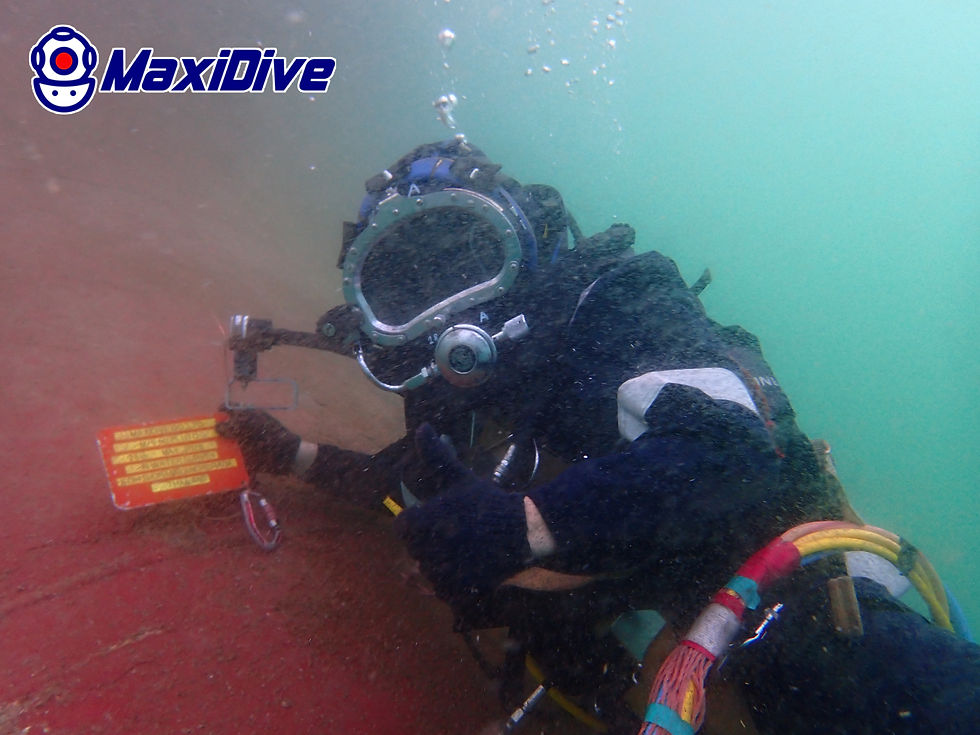
During the in-water survey, the hull plating was reported heavily covered by soft and hard marine growth. Soft marine growth included a light layer of slime and algae, while hard marine growth included barnacles, tube worms and mussels on port and starboard hull areas.
Loss of top coat consistent with abrasion from the vessel’s anchor chain was noted in the bow area. Where visible, the paint condition throughout the vessel was reported in fair condition, although some areas of bare steel were noted.
The flat bottom was reported free from evidence of grounding and contact damage. The overall top coat and weld seams were recorded in fair condition, with no concave weld seams, damage or structural anomalies noted.

Appendage and Sea Chest Inspection
The in-water survey also covered underwater appendages and sea chest gratings. The transducers were reported securely in place, and the port sea chest gratings were secure and fastened in place.
On the starboard sea chest gratings, one loose bolt was noted, but no movement of the gratings was reported. The discharges were free from abnormalities, and all drain plugs were secure in place with no leakage noted.
The port bilge keel showed localized issues, including one missing bilge keel plate section with the double plate intact, visible contact damage and scratches, and one local area bent downwards. The report noted no significant damage. The starboard bilge keel was reported without contact damage or abnormalities.
Sacrificial anodes were reported approximately 50–100% depleted.

Propeller Assembly, Rope Guard and Stern Tube
The propeller blades, hub and boss were reported with heavy coverage by soft and hard marine growth. Propeller surface roughness measurements were recorded as grade “D” on Rubert’s Scale.
The stern tube was found free from structural anomalies. The rope guard was free from entanglement and secure in place. The rope guard top coat was reported in poor condition, with bare steel visible, but no significant concave weld seam was noted.
These findings provide useful technical information for the vessel’s maintenance planning and future underwater service requirements.

Rudder Assembly Inspection
The rudder assembly was reported heavily covered by soft and hard marine growth. The paint coat appeared in poor condition, with areas of missing paint down to bare steel on the leading edge, lower plate, upper plate and side areas.
The leading edge showed pitting, and corrosion was noted on the vertical side weld seam area. The rudder horn was secure in place, and the drain plug was secure with no leakage reported.
The rudder sacrificial anode was secure in place and reported approximately 60–100% depleted.
Why In-Water Survey Matters for Commercial Vessels
An in-water survey provides vessel operators with practical underwater condition information while the vessel remains afloat. It helps technical teams identify marine growth, coating condition, structural concerns, appendage condition, propeller roughness, anode depletion and other underwater findings that may require follow-up maintenance.
For shipowners, ship managers and technical superintendents, this service supports:
underwater condition review without immediate dry docking;
documentation of hull and appendage condition;
early identification of marine growth and coating issues;
planning for hull cleaning, propeller polishing or repair work;
technical communication with class and vessel representatives;
better maintenance planning for future operations.
MaxiDive Commercial Diving Support in Thailand
MaxiDive provides in-water survey, underwater inspection, hull cleaning, propeller polishing, sea chest cleaning, underwater measurement, emergency repair and commercial diving support for vessels operating in Thai ports and anchorages.
This In-Water Survey at Koh Si Chang Anchorage demonstrates MaxiDive’s ability to support vessel operators with structured underwater inspection, measurement tools, SSDS equipment and professional technical documentation.
Conclusion
The In-Water Survey at Koh Si Chang Anchorage provided a detailed underwater condition overview covering hull plating, appendages, sea chest gratings, propeller assemblies, rope guard, stern tube and rudder assemblies.
MaxiDive’s commercial diving team documented marine growth, coating condition, appendage findings, anode depletion and propulsion-related components, giving the vessel’s technical team practical information for maintenance planning and future underwater service decisions.


Comments