


Rubert Scale Propeller Polishing: Why Surface Finish Matters for Vessel Performance

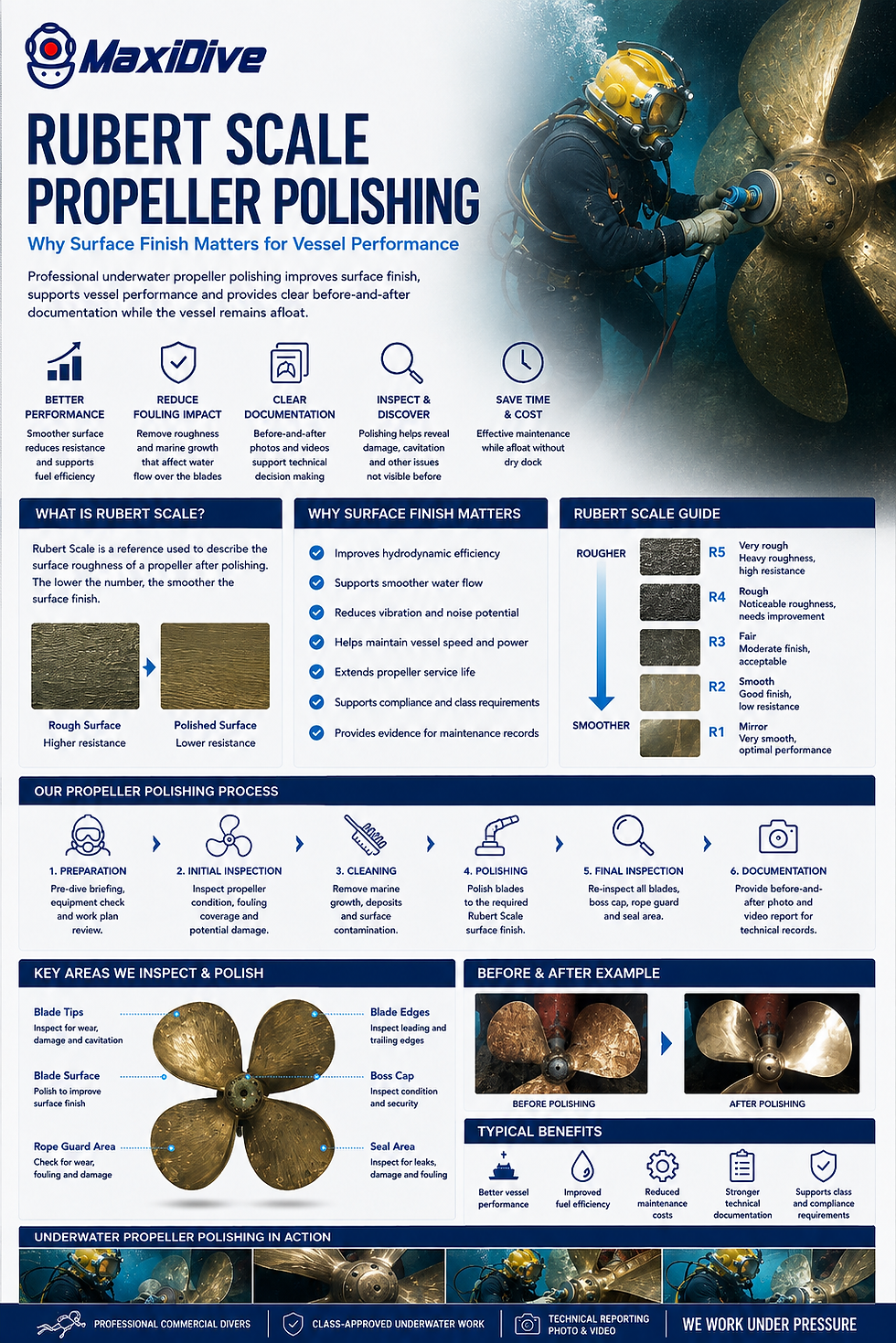
Propeller condition has a direct impact on vessel operation. Even when a vessel’s hull is in acceptable condition, a rough or fouled propeller can affect hydrodynamic performance, increase resistance and reduce the efficiency of power transfer from the engine to the water.
For vessel managers, technical superintendents and marine operators, underwater propeller polishing is not only a visual cleaning task. It is a technical maintenance process that improves surface condition, supports operational performance and provides clear documentation while the vessel remains afloat.
MaxiDive provides underwater propeller polishing services across Thailand, including Laem Chabang, Koh Si Chang Anchorage, Sattahip, Sriracha, Bangkok Port, Map Ta Phut, Songkhla and other Thai ports and anchorages.

Rubert Scale propeller polishing and surface finish quality
Rubert Scale propeller polishing is used to describe and compare propeller surface roughness after cleaning and polishing. For vessel managers, this gives a clearer way to understand the quality of the finished propeller surface instead of relying only on general visual descriptions.
A propeller may look clean from a distance, but surface roughness can still remain on the blade surface. Professional polishing focuses on improving the blade finish, reducing roughness and achieving a documented surface condition suitable for technical review.
The objective is not simply to remove marine growth. The objective is to improve the propeller surface finish and provide reliable before-and-after evidence of the work completed.

Why propeller surface finish matters
A propeller works in a high-load underwater environment. The smoother the blade surface, the more efficiently water can flow across the blades. When the surface becomes rough due to marine growth, deposits, staining or surface contamination, the propeller may not perform as efficiently as intended.
For vessel operators, this can affect voyage performance, fuel planning and maintenance decisions. A clean and properly polished propeller helps support smoother water flow and reduces the negative impact of fouling and surface roughness.
This is why propeller polishing should be treated as part of ship husbandry and underwater maintenance, not as a cosmetic task.
Propeller cleaning vs propeller polishing
Propeller cleaning and propeller polishing are related, but they are not the same.
Propeller cleaning removes marine growth, fouling and deposits from the propeller surface. Propeller polishing goes further by improving the blade surface finish after the fouling has been removed.
For vessel managers, this difference is important. A cleaned propeller may be free from visible fouling, but a polished propeller provides a smoother final surface condition. Rubert Scale propeller polishing helps document that finish in a more structured way.
Professional underwater propeller polishing may include inspection of:
propeller blades
blade edges
blade tips
boss cap
rope guard area
seal area
signs of cavitation
contact marks
surface roughness
marine growth coverage
before-and-after condition
This gives the vessel’s technical team a more complete understanding of the propeller condition.
Before-and-after documentation for vessel managers
Underwater propeller polishing should be supported by clear documentation. Before-and-after photos and video help vessel managers confirm the initial condition, review the polishing result and keep a technical record for maintenance planning.
Documentation can also reveal additional findings that may not be obvious before cleaning. These may include blade edge damage, cavitation marks, rope entanglement, coating loss on nearby areas, rope guard issues or seal-area observations.
For technical superintendents, this evidence is valuable because it supports decisions without waiting for dry dock. The vessel can remain afloat while the underwater team inspects, cleans, polishes and documents the propeller condition.
When vessel managers should schedule propeller polishing
Propeller polishing may be considered when a vessel has been at anchorage for an extended period, after operating in warm tropical waters, before a long voyage, before or after hull cleaning, during planned underwater maintenance or when performance concerns suggest possible underwater fouling.
It may also be useful when the technical team needs updated visual evidence of propeller condition before dry dock planning, class-related review, purchase/sale inspection or voyage continuation.
In many cases, combining underwater inspection with propeller polishing gives the vessel manager the best value. The diving team can document the propeller before work, polish the required areas and then provide final visual evidence of the completed surface condition.
Commercial diving support across Thailand
MaxiDive provides underwater propeller polishing as part of wider commercial diving services in Thailand. Our diving teams support shipowners, vessel managers, technical superintendents, port agents and marine operators with underwater inspection, hull cleaning, propeller polishing, sea chest cleaning, biofouling support, underwater maintenance and emergency underwater repair.
With professional surface-supplied commercial divers, underwater inspection equipment and structured reporting, MaxiDive helps vessel operators review underwater condition, maintain vessel readiness and plan technical follow-up while vessels remain afloat.
For vessels calling Thai ports and anchorages, Rubert Scale propeller polishing provides a practical way to improve propeller surface condition and document the result for technical records.
MaxiDive — We work under pressure.
Internal Links
CTA
Need Rubert Scale propeller polishing in Thailand? Contact MaxiDive for professional underwater propeller polishing, propeller inspection, before-and-after documentation and commercial diving support across Thai ports and anchorages.


Comments