


Commercial Diving Services in Thailand: What Vessel Managers Should Know

Updated: Aug 8

For vessel managers, technical superintendents, port agents and marine operators, underwater work is not simply a maintenance task. It is part of keeping vessels operational, reducing avoidable delays and making informed technical decisions while a vessel remains afloat.
Thailand is an important operating area for commercial vessels, with regular calls at Laem Chabang, Koh Si Chang Anchorage, Sriracha, Sattahip, Bangkok Port, Map Ta Phut, Songkhla and other ports and anchorages. In these locations, reliable commercial diving services in Thailand help shipowners and vessel managers handle underwater inspections, cleaning, repairs, biofouling support and technical documentation without unnecessary dry-dock time.
MaxiDive provides commercial diving support for vessel operators across Thailand, combining underwater work, technical reporting and practical coordination for planned and urgent operations.
Commercial diving services in Thailand for vessel managers
Commercial diving services in Thailand cover a wide range of underwater tasks required during vessel operation, port calls, anchorage stays, class-related inspections and maintenance planning.
For vessel managers, the main value is not only that the work is completed underwater. The value is that the diving contractor can provide clear findings, safe execution, practical recommendations and usable documentation for technical review.
Typical commercial diving support may include:
Underwater inspections and surveys
Hull condition inspection
Propeller inspection and polishing
Hull cleaning and biofouling removal
Sea chest inspection and cleaning
Rope removal and rope guard cleaning
ICCP and anode inspection or replacement
Echo sounder, speed log and transducer support
Underwater welding and cutting support
Cofferdam installation
Emergency underwater repair
CRMS, NZ MPI and Australia biofouling support
Photo and video documentation for technical records
Each task requires the right equipment, trained commercial divers, safe coordination with the vessel and a clear understanding of marine operations.
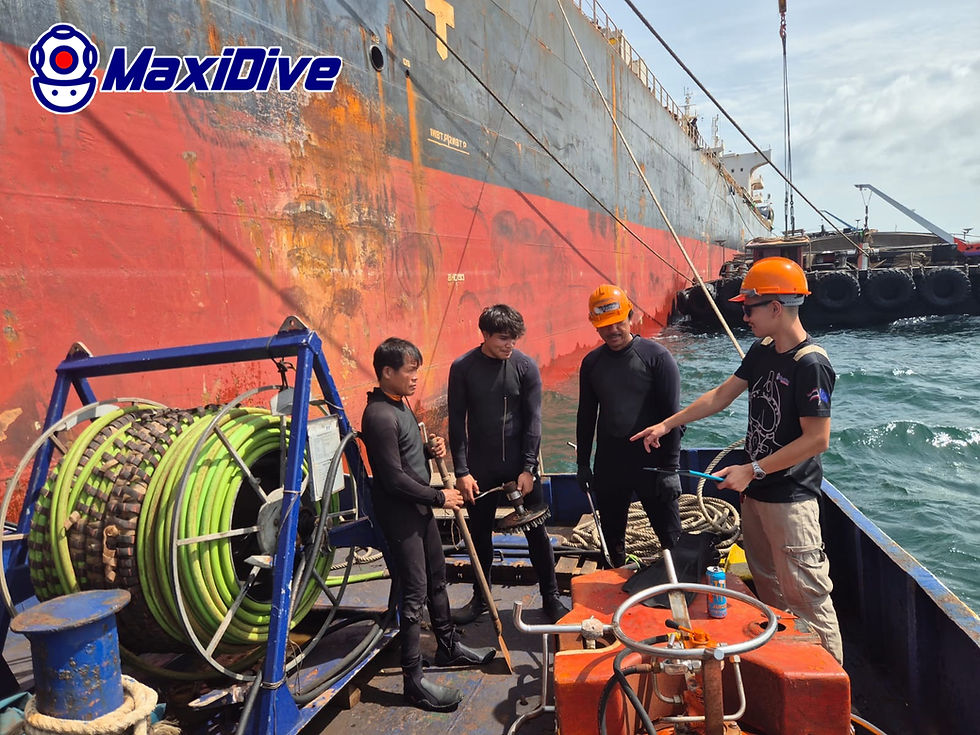
Underwater inspection and technical documentation
A professional underwater inspection gives vessel managers direct evidence of the vessel’s underwater condition. This may include the hull plating, weld seams, coating condition, bulbous bow, sea chest gratings, discharges, bilge keels, thrusters, rudder assembly, propeller assembly, rope guard and other appendages.
Clear underwater documentation is especially important when the vessel’s technical team needs to review condition without dry docking. Photo and video records allow managers to assess findings, compare condition over time and decide whether cleaning, repair or further inspection is required.
MaxiDive’s inspection work is supported by technical reporting and visual documentation. This helps vessel managers avoid guesswork and gives them practical underwater evidence for planning and decision-making.

Hull cleaning and propeller polishing
Marine growth affects underwater surfaces, especially when vessels remain at anchorage, operate in warm waters or have extended port stays. Hull cleaning helps reduce fouling on underwater surfaces, while propeller polishing improves blade surface condition and supports smoother water flow across the propeller.
For vessel managers, hull cleaning and propeller polishing are part of ship husbandry. These services help maintain underwater condition, support vessel performance and reduce the operational impact of marine growth.
Propeller polishing is often documented using the Rubert Scale, with the objective of achieving a smoother blade surface after cleaning and polishing. Technical documentation of the propeller before and after polishing also helps managers review blade condition, cavitation, contact marks, rope guard condition and boss cap status.
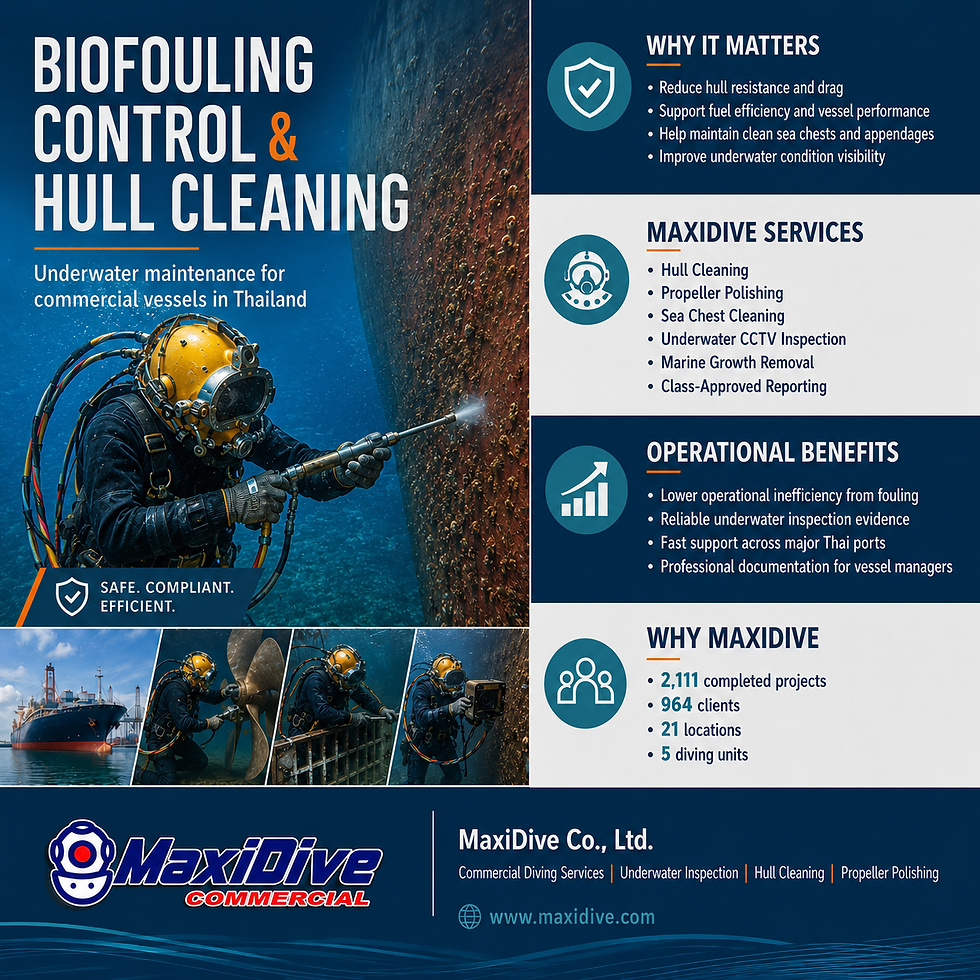
Biofouling, CRMS and compliance support
Biofouling has become a more important operational issue for vessels trading internationally. Some destinations require stricter evidence of hull and niche area condition, including documentation of marine growth and cleaning records.
CRMS biofouling inspection and cleaning support can include underwater inspection, selected cleaning, sea chest and niche area documentation, propeller-related area review, before-and-after photo records and technical video evidence.
For vessel managers, this type of support is useful because it provides documented underwater evidence before arrival, voyage continuation or further compliance review. Instead of treating biofouling only as a cleaning issue, it becomes part of operational planning and risk control.

Underwater repair and emergency response
Not every underwater issue can wait for dry dock. Commercial diving services can support urgent and planned underwater repair tasks while the vessel remains afloat.
Depending on the scope, underwater repair support may include blanking, cofferdam installation, underwater welding, cutting, rope removal, anode replacement, transducer replacement, sea chest work and temporary repair support.
Emergency underwater repair requires more than divers in the water. It requires mobilisation, equipment readiness, experienced supervision, vessel-side coordination and clear communication with the vessel’s technical team.
For vessel operators working on tight schedules, the ability to respond quickly can reduce downtime and support safer operational decisions.
How vessel managers should choose a commercial diving contractor
Choosing a commercial diving contractor should not be based only on availability. Vessel managers should consider whether the company can provide safe operations, proper equipment, technical documentation and experience across multiple types of underwater work.
Important questions include:
Can the contractor support the vessel at the required port or anchorage?
Does the team understand commercial vessel operations?
Can the company provide clear photo and video documentation?
Does the team have experience with class-related underwater inspections?
Can they support both routine and emergency work?
Are the divers and supervisors equipped for professional commercial diving operations?
Can they provide practical findings for technical review?
A strong commercial diving contractor should help the vessel manager understand the underwater situation, not only complete the physical task.
MaxiDive support across Thai ports and anchorages
MaxiDive supports commercial vessels and marine assets across Thailand with underwater inspection, hull cleaning, propeller polishing, underwater maintenance, CRMS biofouling support and emergency underwater repair.
With experience across more than 2,211 projects, 998 clients, 21 locations and 5 diving units, MaxiDive provides practical commercial diving support for shipowners, vessel managers, technical superintendents, port agents and marine operators.
The company’s work is focused on professional execution, technical reporting and operational reliability in real port and anchorage conditions.
MaxiDive — We work under pressure.
Internal Links
CTA
Need commercial diving services in Thailand? Contact MaxiDive for underwater inspection, hull cleaning, propeller polishing, biofouling support, underwater maintenance and emergency underwater repair at Thai ports and anchorages.


Comments