


Vertical Side Cleaning and Propeller Polishing at Koh Si Chang Anchorage
- MaxiDive

- 31 minutes ago
- 4 min read
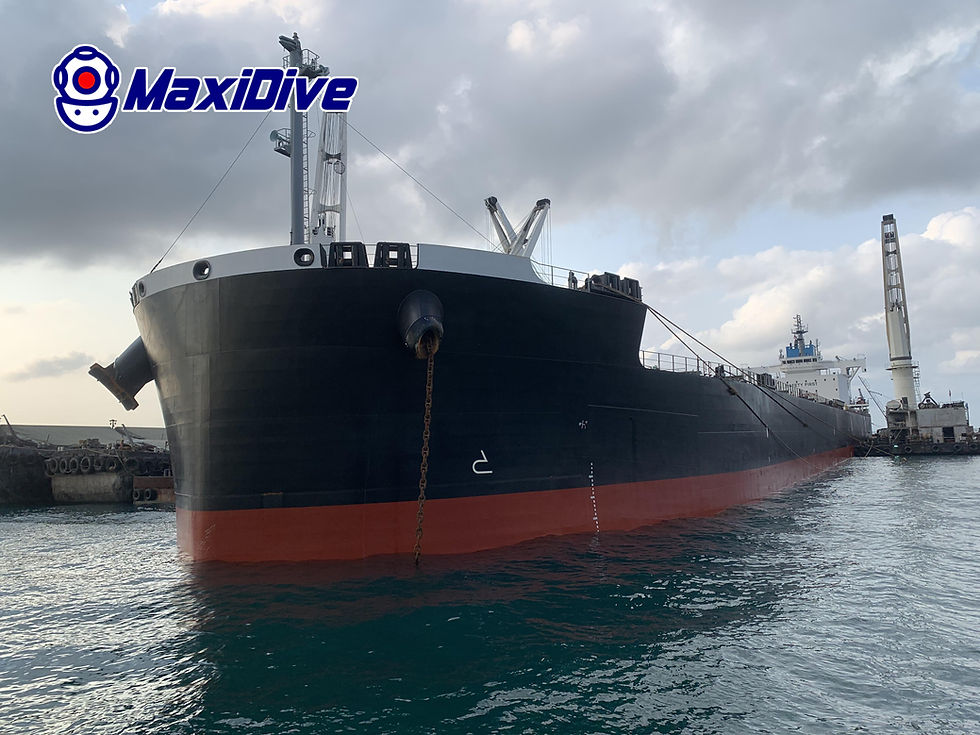
MaxiDive completed Vertical Side Cleaning and Propeller Polishing for a commercial vessel at Koh Si Chang Anchorage, Thailand. The underwater work was carried out to remove marine growth from vertical side areas and improve propeller blade surface condition while the vessel remained afloat.
The operation was performed under moderate sea state conditions with approximately 1.5 meters of underwater visibility. MaxiDive’s commercial diving team used hydraulic and hand tools to clean selected hull areas, sea chest gratings, bilge keels, rudder areas and propeller assemblies.
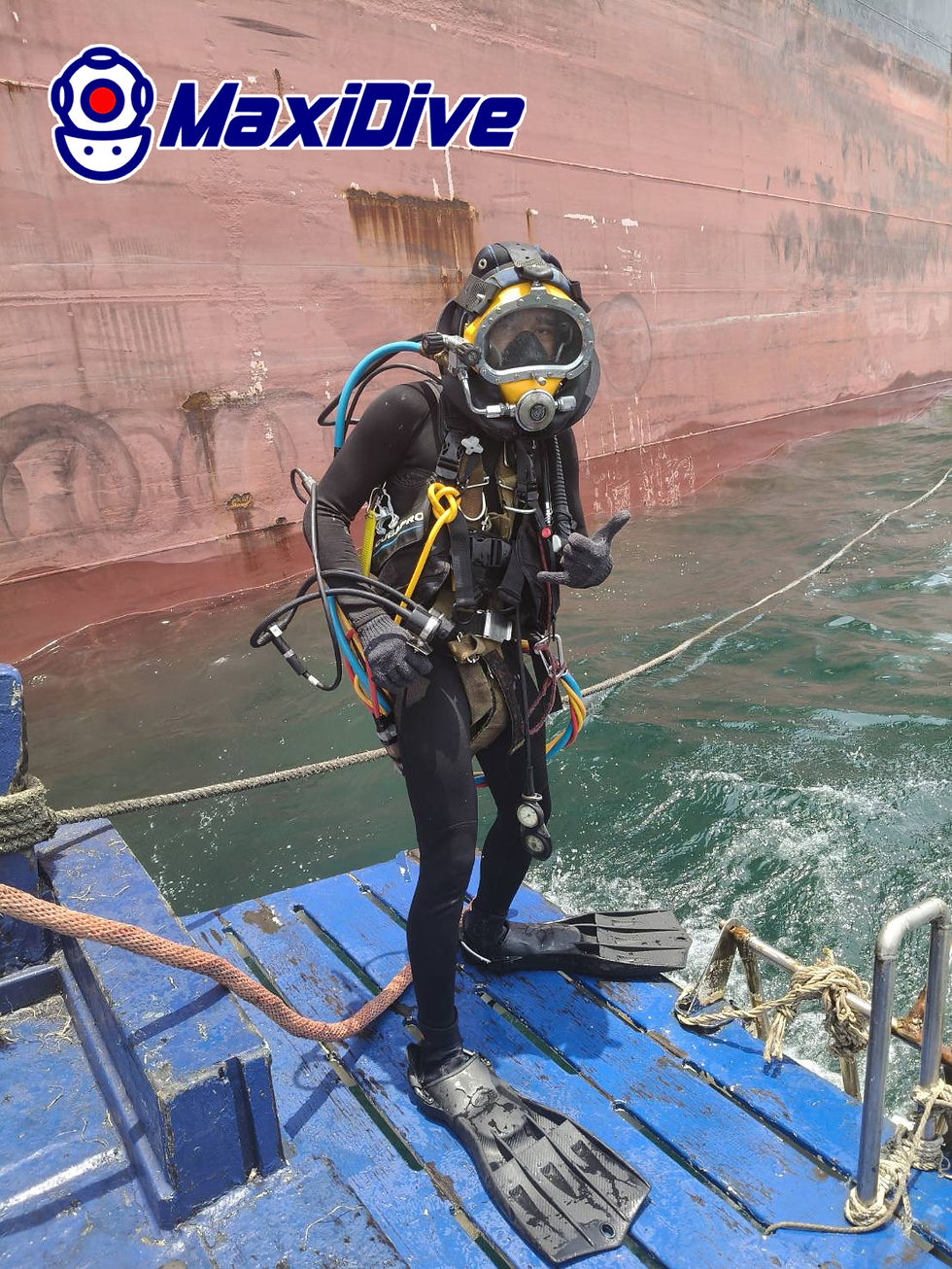
Vertical Side Cleaning and Propeller Polishing: Service Scope
The requested underwater work focused on vertical side cleaning and propeller polishing. MaxiDive’s divers documented marine growth, coating condition, appendage condition and propeller surface roughness before and after cleaning.
The main work scope included:
vertical side cleaning;
hull plating inspection and cleaning support;
sea chest grating cleaning;
bilge keel cleaning;
discharge inspection;
sacrificial anode condition review;
propeller assembly cleaning;
propeller polishing using hydraulic tools;
rudder cleaning and inspection;
underwater photo documentation for technical review.
This type of underwater maintenance helps vessel operators manage marine growth, improve underwater surface condition and support future maintenance planning without immediate dry docking.

Hull Plating Condition
The hull plating was found lightly scattered with hard and soft marine growth on the port and starboard sides. Marine growth included slime, barnacles and goose-neck barnacles.
The flat bottom was also reported with light scattered coverage by soft and hard marine growth. Loss of top coat consistent with abrasion from the vessel’s anchor chain was noted in the bow area. Where visible, paint throughout the vessel was found in good condition, although some areas of bare steel were observed.
No concave weld seams were noted, and no damage or structural anomalies were reported.

Appendage Cleaning and Inspection
The underwater inspection also covered appendages, sea chest gratings, bilge keels, transducers, discharges and sacrificial anodes.
Sea chest gratings were found blocked 15–25% by barnacles. Bilge keels were covered with approximately 25% hard marine growth and 40% soft marine growth. Sea chest gratings and bilge keels were cleaned using hand tools.
After cleaning, the paint coat on the bilge keels was noted in good condition, with approximately 5% top coat missing and less than 1% bare steel visible. Sea chest gratings were secure with no movement, contact damage or abnormality noted.
A port-side bilge keel section was reported with a leading edge deflection bent down approximately 20% from normal profile over a length of around 1 meter. Transducers were mostly clean and in good profile, with no abnormality reported. Discharges showed no anomalies but were partially blocked by barnacles. Sacrificial anodes were active, secure and partially depleted.
Propeller Cleaning and Polishing Result
The propeller assembly was found covered by marine growth, including approximately 5% hard marine growth, 60% soft marine growth and calcareous deposits across the propeller surface.
The propeller assembly was cleaned using hydraulic tools fitted with 3M Scotch pads. Initial blade surface roughness, excluding marine fouling, was recorded as Rubert “E”. All blade surfaces, blade palms and the hub were then polished using silicate grit polishing discs.
Upon completion, the average blade surface roughness was improved to Rubert “A” / 1 micron CLA. This result provides a smoother propeller surface condition and supports better propulsion efficiency.
Minor contact damage was noted on one propeller blade leading edge, with no cavitation or crack reported.
Rudder Cleaning and Inspection
The rudder assembly was populated with hard and soft marine growth. The rudder was cleaned by divers as part of the underwater service scope.
Rudder condition documentation is important because marine growth, coating condition and underwater component security can affect future maintenance planning. Cleaning and inspection help the vessel’s technical team review rudder condition while the vessel remains afloat.
Why Vertical Side Cleaning and Propeller Polishing Matter
Marine growth on vertical side areas, sea chest gratings, bilge keels, rudder surfaces and propeller assemblies can affect vessel performance and increase maintenance requirements. Even light or scattered growth can develop further if not addressed in time.
Vertical Side Cleaning and Propeller Polishing help vessel operators:
remove marine growth from underwater surfaces;
reduce fouling impact on vessel performance;
improve propeller surface condition;
document hull and appendage condition;
identify coating wear or bare steel areas;
review sea chest and bilge keel condition;
plan future maintenance without immediate dry docking.
Propeller polishing is especially important because surface roughness can affect propulsion efficiency. Improving the propeller from Rubert “E” to Rubert “A” provides a clear technical result for the vessel’s maintenance records.
MaxiDive Commercial Diving Support in Thailand
MaxiDive provides hull cleaning, vertical side cleaning, propeller polishing, underwater inspection, sea chest cleaning, emergency underwater repair and commercial diving support for vessels operating in Thai ports and anchorages.
This Vertical Side Cleaning and Propeller Polishing operation at Koh Si Chang Anchorage demonstrates MaxiDive’s ability to support vessel operators with underwater cleaning, hydraulic tools, hand tools and practical technical documentation.
Conclusion
The Vertical Side Cleaning and Propeller Polishing operation at Koh Si Chang Anchorage helped remove marine growth from hull side areas, sea chest gratings, bilge keels, rudder areas and propeller assemblies.
MaxiDive’s commercial diving team completed the requested underwater cleaning and propeller polishing scope, improved the propeller blade surface roughness from Rubert “E” to Rubert “A”, and documented key underwater findings for the vessel’s technical review and maintenance planning.


Comments