


Underwater Photo Inspection Laem Chabang for Hull and Appendage Condition Assessment


MaxiDive Co., Ltd. completed an underwater photo inspection Laem Chabang project for a commercial vessel at Laem Chabang Port, Thailand. The operation was performed to document the underwater condition of the vessel’s hull plating, appendages, propeller assemblies, rudder system, sea chest areas, bow thruster gratings, and related underwater components.
The inspection was carried out under calm sea conditions with limited underwater visibility. MaxiDive’s diving team used underwater photo and video equipment to provide structured visual documentation for the vessel’s technical team and onboard representatives.
Underwater Photo Inspection Laem Chabang Scope
The scope of work included a full underwater visual inspection with photographic documentation of key underwater areas. The purpose of the inspection was to record hull condition, marine growth level, coating status, appendage condition, and any visible anomalies that could affect vessel operation, maintenance planning, or technical assessment.
The inspection covered:
hull plating and flat bottom areas;
bow and vertical side shell plating;
bilge keel sections;
bow thruster gratings;
sea chest strainers;
drain plugs;
propeller blades, hub, and boss;
rope guard and stern tube seal area;
rudder assembly and coating condition;
sacrificial anodes.
This type of underwater photo inspection Laem Chabang service allows vessel managers to receive accurate visual evidence without dry docking the vessel.

Hull Plating and Marine Growth Findings
The vessel’s hull plating was found covered by soft marine growth, including green algae, sea grass, and scattered barnacles. The flat bottom area was also observed with soft and hard marine growth.
Loss of topcoat was noted in some areas, with light surface corrosion visible where coating protection had been reduced. No damage or structural anomalies were reported during the hull plating inspection.
Documenting marine growth and coating condition is important for vessel owners and managers because fouling can increase drag, reduce fuel efficiency, and affect long-term coating performance. Early inspection helps technical teams decide whether hull cleaning, coating monitoring, or further maintenance planning is required.
Appendage Inspection and Bow Thruster Gratings
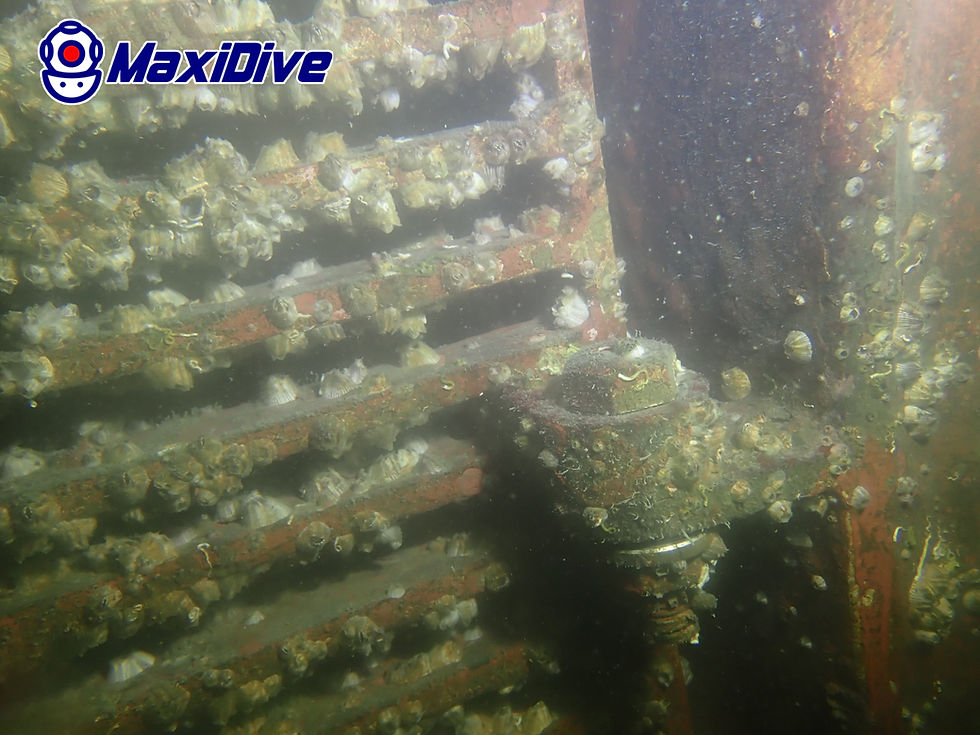
During the appendage inspection, the bilge keel sections were observed with normal profile. Bow thruster gratings on both the starboard and port sides were found in place, secure, and with no movement noted.
However, the bow thruster gratings were found heavily covered by hard marine growth. Anodes in the inspected area were observed partially depleted. Sea chest strainers were found secure, with no anomalies noted, and drain plugs were also found secure.
These findings are important for operational review because bow thruster gratings, sea chest strainers, and drain plugs must remain secure and unobstructed to support safe vessel operation.
Propeller Assembly Inspection
The propeller blades, hub, and boss were observed with soft and hard marine growth. The rope guard also showed marine growth coverage. The stern tube seal area was found free from marine growth, with no structural anomalies noted.
No outline damage to the propeller blades was reported during the inspection.
Propeller condition directly affects vessel efficiency. Even when no physical damage is found, marine growth on the blades, hub, boss, and rope guard can increase resistance and reduce propulsion performance. Underwater inspection helps determine whether propeller polishing or cleaning should be scheduled.

Rudder Assembly and Coating Condition
The rudder assembly was found covered by algae and barnacles on the vertical side surfaces. Coating loss was observed in some areas, including exposed sections where paint damage had reached bare steel. Minor corrosion was noted on exposed areas, while anodes were found in place and secure.
Rudder inspections are an essential part of underwater vessel condition assessment because coating damage, corrosion, and marine growth can affect long-term structural protection and maintenance planning.
Commercial Diving Support at Laem Chabang Port
Laem Chabang Port is one of Thailand’s most important commercial port locations, serving container vessels, bulk carriers, tankers, and other international shipping traffic. MaxiDive provides underwater inspections, in-water surveys, hull cleaning, propeller polishing, class-related inspections, and emergency underwater support at Laem Chabang and other major Thai ports.
MaxiDive’s in-water survey and inspection services are supported by professional underwater documentation suitable for shipowners, vessel managers, insurers, technical departments, and class representatives. The company’s service pages also position underwater inspection, hull condition assessment, propeller inspection, rudder inspection, sea chest checks, thruster inspections, and photographic reporting as core parts of its commercial diving scope in Thailand.
Conclusion
MaxiDive successfully completed the underwater photo inspection Laem Chabang project, documenting the condition of the vessel’s hull plating, appendages, bow thruster gratings, sea chest strainers, propeller assemblies, rope guard, stern tube seal, rudder assembly, and anodes.
The inspection confirmed no reported structural anomalies in the inspected underwater areas, while marine growth, coating loss, and minor corrosion were documented for technical review. The findings provide the vessel’s management team with clear visual evidence to support maintenance planning and operational decision-making.


Comments