


The Hidden Risks of Marine Growth:

Updated: Jan 14
Why Biofouling Can Be Dangerous for Your Vessel

Marine growth — also known as biofouling — may appear harmless at first glance. A thin layer of algae or a few barnacles on the hull rarely seem urgent. However, what begins as a minor accumulation can quickly escalate into serious operational, mechanical, and financial problems. In the warm waters of Southeast Asia, where biological activity is especially intense, biofouling develops faster and causes more damage than many vessel operators realize.
This article explains why biofouling is not “just a cosmetic issue,” but a critical risk factor that affects vessel performance, operational costs, and safety — and why regular underwater maintenance is essential.
1. Increased Fuel Consumption and Loss of Speed
Even a small accumulation of algae significantly increases hydrodynamic drag. As drag increases, the vessel must use more power to maintain the same speed.
Typical consequences include:
higher fuel expenditure per nautical mile,
reduced maximum speed,
increased load on main engines,
higher exhaust emissions.
Studies show that moderate marine growth can increase fuel consumption by 15–30%, while heavy barnacle infestation may raise it by more than 40%.
2. Damage to the Hull Surface and Protective Coatings
Marine organisms attach firmly to the hull, and some — such as barnacles and shellfish — have sharp, abrasive structures. When they penetrate or weaken protective coatings, corrosion begins to spread beneath the paint layer.
Unchecked biofouling can lead to:
early corrosion of steel surfaces,
pitting and surface deterioration,
detachment of protective coatings,
structural vulnerabilities.
Regular underwater cleaning prevents these long-term consequences and prolongs the life of the vessel’s hull.
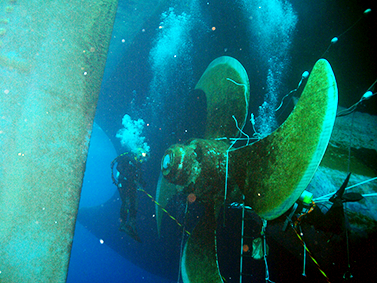
3. Reduced Engine Efficiency Due to Propeller Fouling
Biofouling on the propeller is one of the most underestimated problems in the maritime industry. Even a small layer of growth disrupts the smooth flow of water, causing the propeller to lose efficiency.
Common results include:
reduced thrust,
vibration and noise,
misalignment stress on the drive shaft,
overheating of engine components.
Propeller polishing restores optimal blade smoothness and improves energy efficiency — often delivering immediate performance gains.
4. Increased Risk of Mechanical Failures
Heavy fouling does not only affect performance; it can trigger mechanical issues that require urgent underwater intervention.
Potential risks include:
blocked water intakes,
overheating due to restricted cooling flow,
entanglement of marine debris trapped within growth,
added weight on thrusters and stabilizers.
A comprehensive underwater inspection can detect these risks before they turn into costly repairs.
5. Environmental and Regulatory Concerns
Many regions — including Southeast Asia — have introduced stricter regulations regarding biofouling due to its ecological impact. When vessels travel from one port to another, they may carry invasive species on their hulls.
This increases the risk of:
ecological contamination,
introduction of non-native organisms,
penalties for non-compliance with port requirements,
delays during port inspections.
Maintaining a clean hull is not only financially beneficial — it is increasingly becoming a regulatory obligation.
6. Higher Dry-Docking Costs in the Long Term
If biofouling remains untreated for an extended period, it eventually requires more aggressive cleaning and repairs during dry-docking.
This results in:
longer shipyard time,
higher maintenance expenses,
replacement of damaged coatings,
additional anti-fouling treatments.
Regular underwater cleaning by certified divers is a far more cost-effective strategy.
Conclusion
Marine growth may start small, but the risks it introduces are significant. From fuel efficiency to mechanical reliability, hull integrity, and regulatory compliance — biofouling affects every aspect of vessel operation. For this reason, routine underwater inspections and timely cleaning are essential for all vessel types operating in tropical waters.
MaxiDive provides professional hull cleaning, propeller polishing, and underwater inspection services across the Gulf of Thailand, helping vessel operators avoid unnecessary costs and maintain optimal performance.
Protect your vessel from the hidden risks of marine growth. Contact MaxiDive for certified underwater cleaning and inspection services.
📞 24/7 Emergency Hotline: +6693-272-6084
📧 Email: info@maxidive.com


Comments