


Sea Chest Inspection Thailand at Laem Chabang Port

Updated: Aug 14

MaxiDive completed a professional sea chest inspection Thailand project for a commercial vessel at Laem Chabang Port.
The operation focused exclusively on underwater visual inspection and documentation of the vessel’s accessible sea chest components, including gratings, internal areas, visible anodes, coatings and surrounding structures.
The purpose of the inspection was to provide the vessel’s technical personnel with direct underwater evidence of the sea chest condition while the vessel remained afloat.
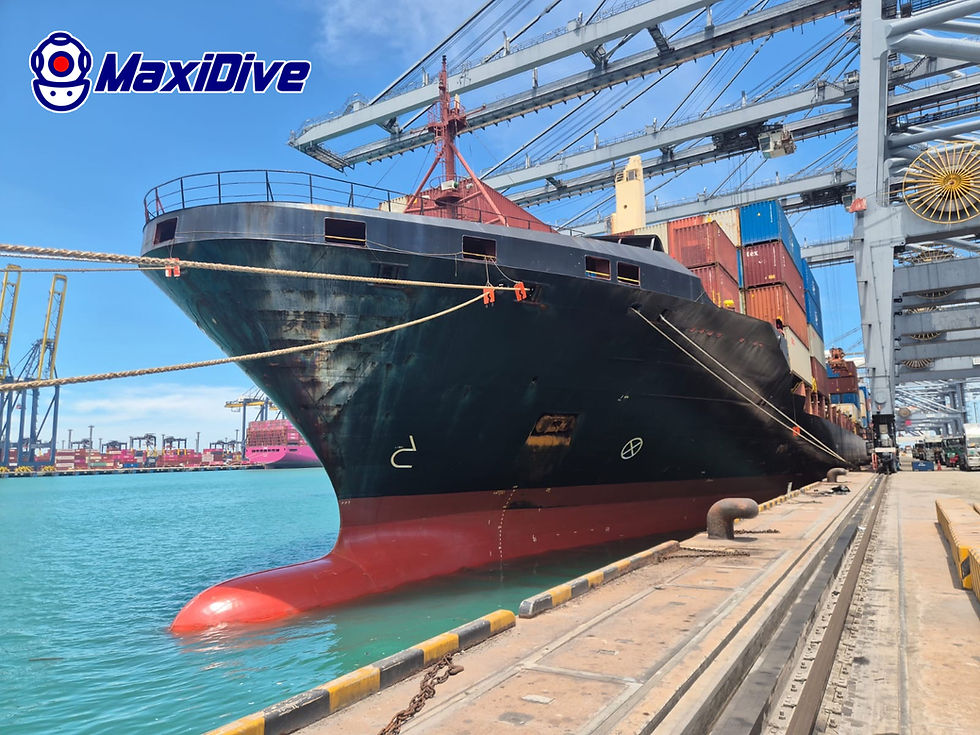
Sea Chest Inspection Thailand for Condition Assessment
The sea chest inspection Thailand scope included systematic visual examination of accessible underwater components associated with the vessel’s seawater intake system.
The commercial diving team inspected and documented:
external sea chest gratings;
visible grating fastenings;
accessible internal sea chest areas;
visible structural surfaces;
anodes;
coating condition;
surrounding hull areas;
visible marine growth;
signs of corrosion or deterioration;
other accessible abnormalities.
Photo and video documentation was recorded to provide a clear condition reference for technical review.
The inspection was carried out according to the agreed scope and concentrated on identifying visible conditions that might require monitoring or further technical assessment.

Sea Chest Grating Condition
External sea chest gratings are important inspection points because they protect seawater intake openings while remaining continuously exposed to the underwater environment.
During the inspection, the diving team examined accessible gratings and surrounding areas for visible indications of:
mechanical damage;
deformation;
corrosion;
coating deterioration;
marine growth;
condition of fastening points;
other visible abnormalities.
Close-range underwater observation allowed the condition of the grating surfaces and surrounding structures to be documented.
The findings provide vessel managers and technical superintendents with visual evidence that can be reviewed after completion of the diving operation.

Internal Sea Chest Area Inspection
Accessible internal areas were also visually assessed where inspection access allowed.
The commercial diver documented visible internal surfaces and structural details to provide additional information about the condition of the sea chest assembly.
Inspection observations included visible:
internal surface condition;
coating condition;
corrosion indications;
marine growth presence;
structural irregularities;
accessible fittings and components.
Because sea chest areas are difficult to assess from above the waterline, underwater visual documentation can provide valuable information without requiring dry docking solely for condition observation.
Anode and Coating Condition
Visible anodes and coating surfaces were included in the inspection scope.
The commercial diving team examined accessible anodes for their apparent condition and documented surrounding coating surfaces.
These observations can assist technical personnel in assessing:
visible anode condition;
apparent material consumption;
coating deterioration;
exposed metal areas;
corrosion indications;
general condition of surrounding underwater surfaces.
Photo and video evidence creates a useful technical reference that can be compared with previous or future inspections.

Technical Underwater Documentation
A professional underwater inspection should provide more than verbal observations.
During the operation, underwater photographs and video footage were recorded to document the visible condition of the inspected areas.
This documentation can support:
vessel condition assessment;
technical review;
maintenance planning;
comparison with future inspections;
identification of areas requiring monitoring;
communication between vessel managers and technical departments.
Clear visual records allow responsible personnel to evaluate underwater findings after completion of the diving operation and determine whether any further technical action should be considered.
Why Sea Chest Inspection Matters
Sea chests form part of the vessel’s seawater intake system and therefore require periodic condition assessment.
Marine growth, corrosion, coating deterioration or mechanical abnormalities around gratings and internal areas may affect the visible condition of the system and require further technical evaluation.
A professional underwater inspection provides direct information about areas that would otherwise remain difficult to observe while the vessel is afloat.
For vessel managers and technical superintendents, this can reduce uncertainty and provide a documented basis for subsequent maintenance planning.
Underwater Inspection at Laem Chabang Port
At Laem Chabang Port, MaxiDive provides professional underwater inspection support for vessels requiring condition assessment while remaining afloat.
Inspection capabilities include:
sea chest inspection;
sea chest grating inspection;
underwater hull inspection;
propeller and rudder condition inspection;
underwater appendage assessment;
CCTV inspection;
underwater photo and video documentation;
technical condition reporting.
Operations are coordinated according to vessel schedule, port conditions, underwater visibility, accessibility and the agreed inspection scope.
The objective is to provide reliable underwater information for vessel managers, technical superintendents and other responsible stakeholders.
Reliable Condition Information for Vessel Managers
Underwater inspection allows technical personnel to obtain direct evidence of submerged component condition without relying only on assumptions from above the waterline.
By systematically examining sea chest gratings, accessible internal areas, visible anodes and surrounding structures, the commercial diving team can identify and document conditions requiring technical attention.
MaxiDive provides professional sea chest inspection Thailand services at Thai ports, supported by commercial diving teams, underwater photo/video systems and structured technical documentation.
MaxiDive — We work under pressure.


Comments