


NZ Bio-foul Inspection Thailand: CCTV Underwater Survey at Koh Si Chang
- MaxiDive

- 7 hours ago
- 4 min read

NZ Bio-foul Inspection Thailand: CCTV Underwater Survey at Koh Si Chang
MaxiDive completed an NZ bio-foul inspection Thailand project at Koh Si Chang Anchorage, providing underwater CCTV and photographic documentation of the vessel’s hull condition for biofouling review.
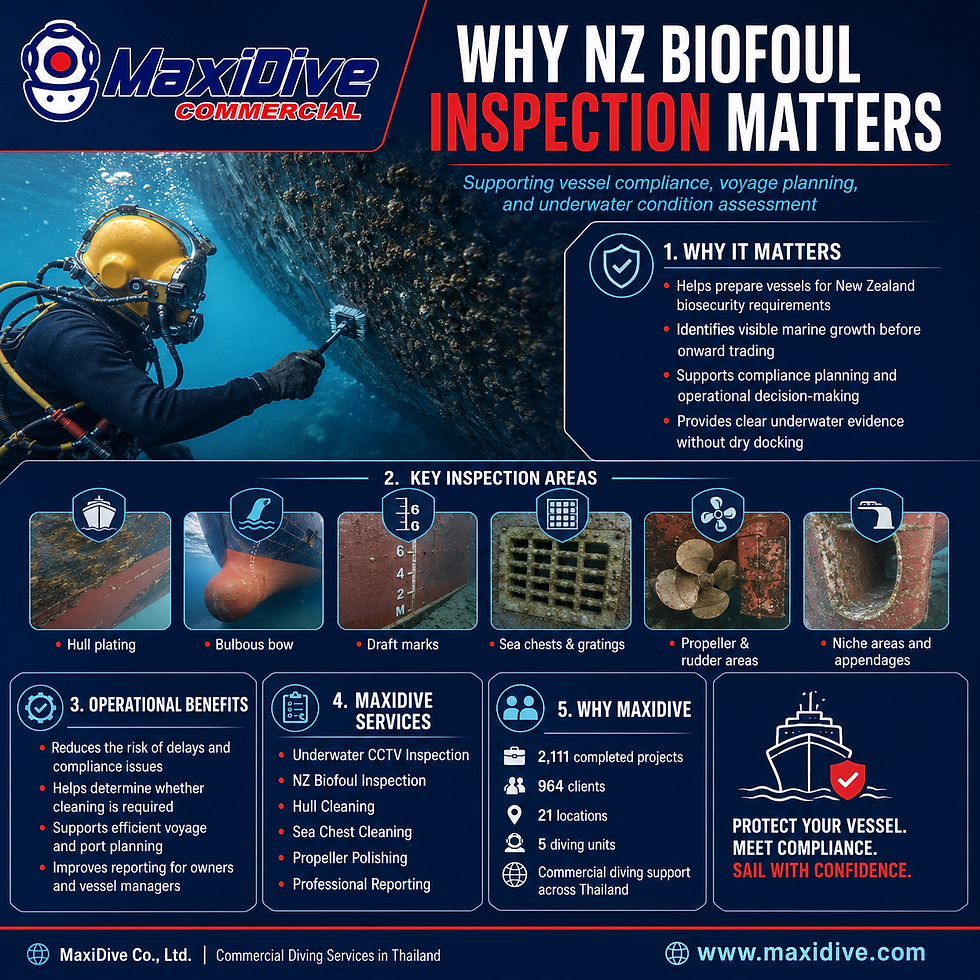
The operation was carried out while the vessel remained afloat, allowing the ship’s underwater condition to be documented without dry docking. MaxiDive’s commercial diving team inspected and recorded selected underwater areas, including hull plating, bulbous bow sections, draft mark areas, and propeller-related zones.
The purpose of the inspection was to support biofouling condition assessment and provide clear underwater evidence for technical and operational review.

CCTV NZ Bio-foul Inspection at Koh Si Chang Anchorage
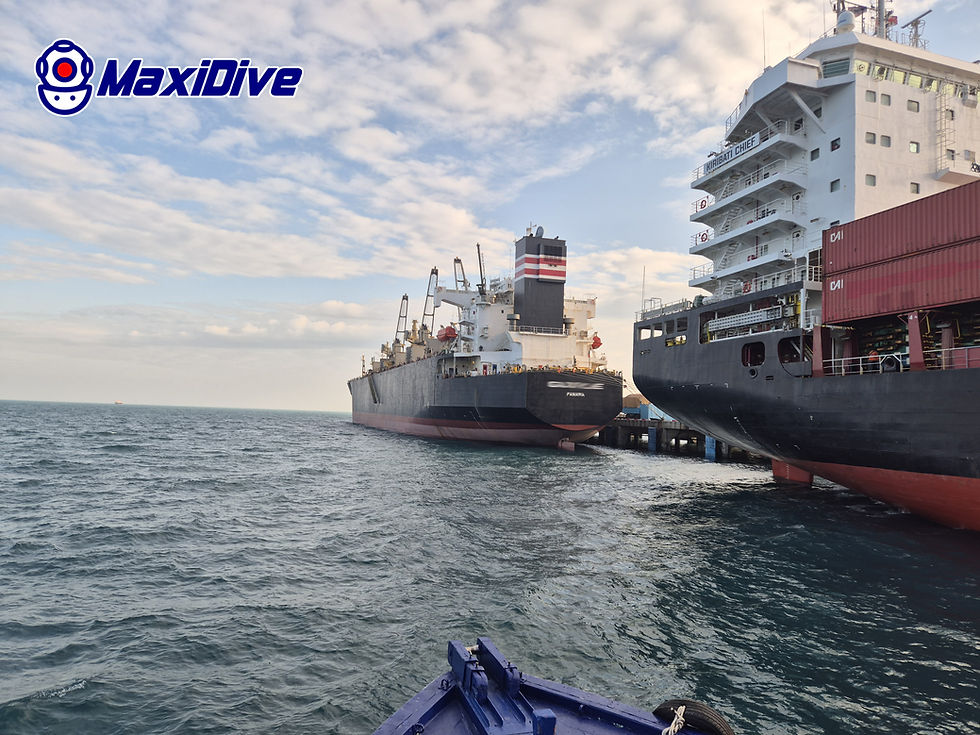
The inspection was performed at Koh Si Chang Anchorage, one of Thailand’s major vessel anchorage areas for commercial ships awaiting cargo operations, inspection, maintenance, or further voyage planning.
For this project, MaxiDive used underwater CCTV and photo documentation equipment to record the condition of selected underwater areas. The available inspection references included visible biofouling documentation around the bulbous bow, bow draft mark area, and propeller-side inspection points.
The inspection was conducted in calm sea conditions with approximately 4 meters of water visibility, allowing the diving team to collect usable visual evidence for review.

Scope of Underwater Work
The underwater scope included:
CCTV NZ bio-foul inspection
Underwater photo documentation
Hull plating condition reference
Bulbous bow biofouling documentation
Bow draft mark inspection
Propeller-side visual inspection
Vessel underwater condition recording
Visual evidence collection for biofouling review
The inspection was completed using commercial diving equipment, CCTV system support, Olympus Tough camera, and GoPro documentation.

Why NZ Bio-foul Inspection Matters
Biofouling control is an important part of vessel compliance, environmental protection, and operational readiness. Vessels trading to New Zealand, Australia, and other strict biosecurity regions may require clear evidence of underwater hull condition and marine growth levels before arrival or during voyage planning.
An NZ bio-foul inspection Thailand helps vessel managers understand whether underwater areas may require cleaning, further inspection, or supporting documentation before the vessel continues operations.
Key inspection areas often include:
Hull plating
Bulbous bow
Sea chests and gratings
Bilge keels
Rudder area
Propeller assembly
Draft marks
Niche areas and appendages
For this project, MaxiDive documented visible underwater biofouling and condition evidence at selected points, helping the vessel team review the current underwater status before further operational decisions.
Underwater Documentation for Vessel Managers
Clear underwater documentation is essential for vessel managers, owners, agents, and technical teams. CCTV and photographic evidence allows shore-based teams to review underwater conditions without relying only on verbal reporting.
MaxiDive’s inspection process provides:
Visual confirmation of underwater condition
CCTV and photo records from selected inspection areas
Documentation of visible marine growth
Evidence for technical and operational review
Support for compliance-related decision-making
Fast underwater inspection support at Thai ports and anchorages
This allows vessel managers to assess whether additional cleaning, reporting, or follow-up underwater work is required.
Biofouling Inspection Without Dry Docking
One of the key advantages of underwater inspection is that the vessel can remain afloat. This helps reduce operational disruption and supports faster decision-making while the vessel is at anchorage.
For shipowners and managers operating in Thailand, underwater CCTV inspection can be used as a practical first step before arranging cleaning, class review, or biofouling compliance preparation.
MaxiDive supports this process with commercial diving teams, underwater inspection equipment, and professional reporting for vessels across Thailand’s major ports and anchorages.
MaxiDive Commercial Diving Support in Thailand
MaxiDive provides underwater inspection, hull cleaning, propeller polishing, sea chest cleaning, and commercial diving services across Thailand. With 2,111 completed projects, 964 clients, 21 locations, and 5 diving units, MaxiDive supports shipowners, fleet managers, port operators, and class representatives with professional underwater services.
For biofouling-related work, MaxiDive can assist with:
NZ bio-foul inspection Thailand
New Zealand MPI / Australia-related inspection support
Underwater CCTV inspection
Hull and appendage condition assessment
Hull cleaning and marine growth removal
Sea chest and grating cleaning
Propeller polishing
Underwater reporting and photo documentation
Conclusion
MaxiDive successfully completed a NZ bio-foul inspection Thailand project at Koh Si Chang Anchorage, providing CCTV and underwater photo documentation of selected hull and appendage areas.
The inspection supported the vessel’s biofouling condition review by documenting underwater areas while the vessel remained afloat. This type of inspection helps vessel managers make informed decisions regarding compliance preparation, hull condition, and possible follow-up cleaning requirements before onward operations.
For shipowners, managers, and agents requiring underwater biofouling inspection, CCTV documentation, or hull cleaning support in Thailand, MaxiDive provides professional commercial diving services across the country’s major ports and anchorages.


Comments