


CRMS Bio-Fouling Inspection Thailand at Laem Chabang Port

Updated: Aug 14

CRMS Bio-Fouling Inspection Thailand at Laem Chabang Port
MaxiDive completed a CRMS Bio-Fouling Inspection Thailand project at Laem Chabang Port, providing a structured underwater assessment of a commercial vessel’s hull condition, appendages and selected niche areas.
The purpose of the operation was to document the visible underwater condition, identify the presence and distribution of marine growth and provide clear photo and video evidence for technical and compliance-related review.
For vessels operating on international routes, accurate biofouling assessment can be an important part of voyage preparation and hull-condition management. Underwater inspection gives vessel managers direct information about areas that cannot be properly assessed from above the waterline.
CRMS Bio-Fouling Inspection Thailand for Hull Condition Assessment
The CRMS Bio-Fouling Inspection Thailand scope focused on systematic observation and documentation of accessible underwater surfaces.
The commercial diving team assessed the visible condition of selected hull zones and recorded the presence, type and distribution of marine growth where observed.
Inspection coverage included areas such as:
hull plating;
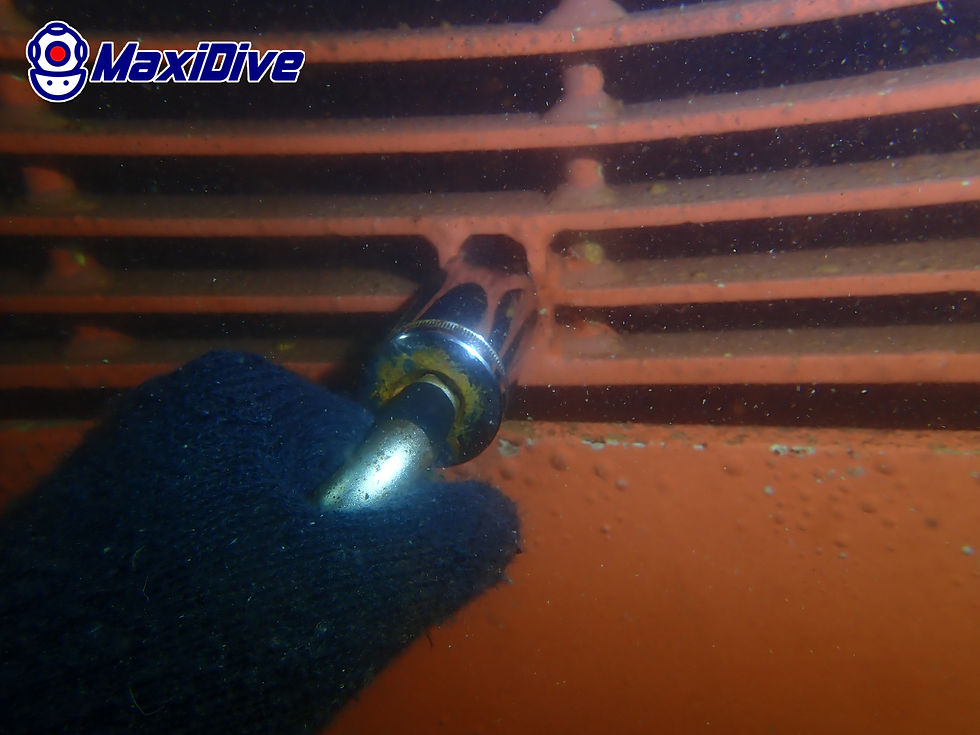
sea chest and grating areas;
discharge and overboard openings;
rudder zones;
propeller-related areas;
underwater appendages;
other accessible niche areas.
These locations are particularly important during biofouling assessments because recessed structures, gratings, appendages and other niche areas can retain marine organisms even when large areas of the hull appear to be in satisfactory condition.
The inspection provided a structured condition reference that could be reviewed by the vessel’s technical team following completion of the underwater operation.
Underwater Inspection at Laem Chabang Port
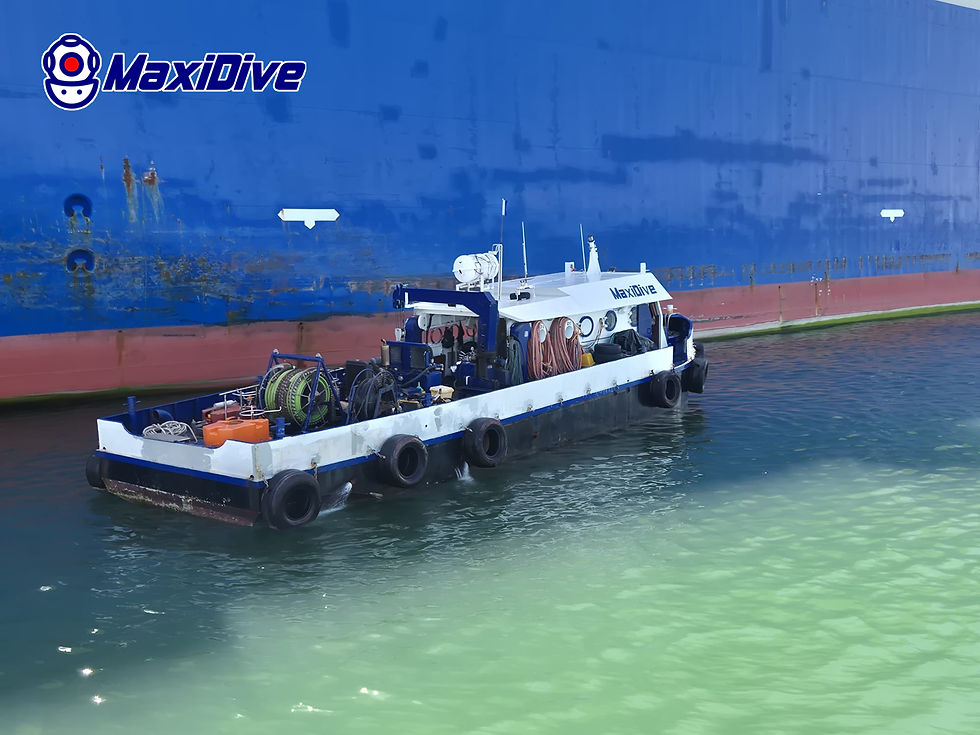
The MaxiDive commercial diving team carried out the inspection alongside the vessel at Laem Chabang Port.
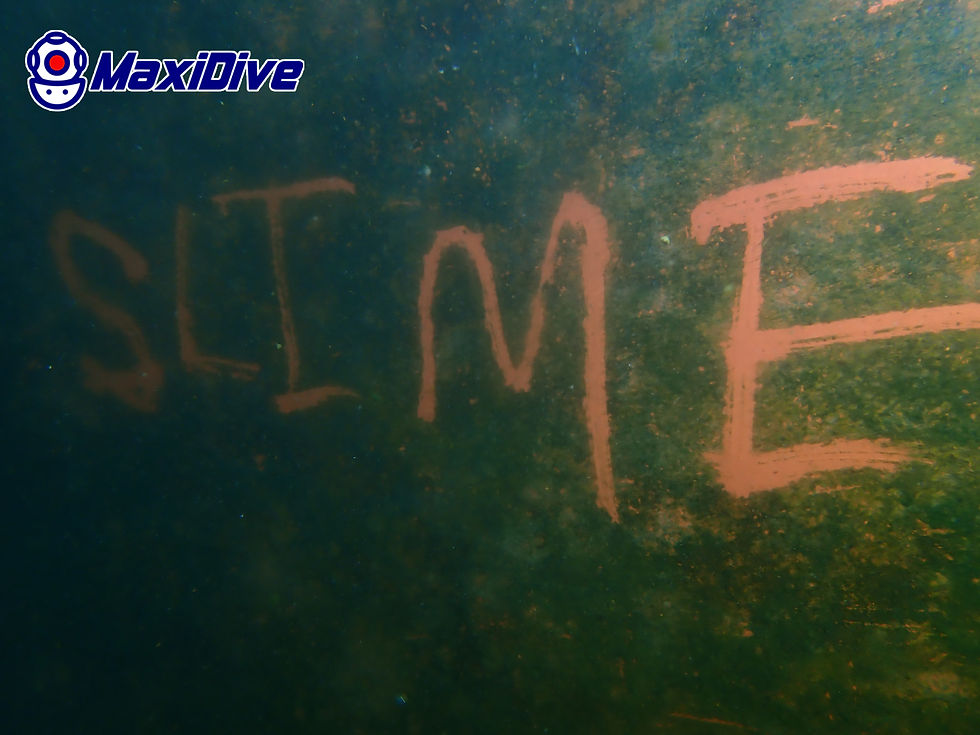
Underwater visibility required close-range observation and controlled diver positioning. Each accessible area within the agreed scope was visually assessed and documented using underwater photo and video equipment.
The inspection identified visible slime and marine-growth presence in selected areas. These observations were recorded as part of the vessel’s underwater condition assessment.
Rather than relying on assumptions based on surface observations, vessel managers received direct visual evidence showing the actual condition below the waterline.
This information can support technical review, voyage preparation and decisions regarding any further action that may be considered necessary by the vessel operator.

Underwater Documentation for Biofouling Assessment
Professional underwater documentation is an important component of CRMS-related inspection support.
During the operation, photo and video records were produced to document accessible underwater areas and provide a visual reference for subsequent review.
Documentation can help technical personnel evaluate:
location of visible marine growth;
condition of hull surfaces;
biofouling presence in niche areas;
condition of sea chest gratings;
condition around discharge openings;
visible condition of underwater appendages;
condition of rudder and propeller-related areas;
general underwater hull condition.
This structured visual record allows shipowners, vessel managers and technical superintendents to review findings after the diving operation and maintain a clearer record of the vessel’s underwater condition.
Why CRMS Bio-Fouling Inspection Matters
Biofouling management has become an increasingly important consideration for vessels operating between different jurisdictions.
Marine organisms may accumulate on submerged hull surfaces and particularly within niche areas such as gratings, recesses, appendages and openings.
A professional underwater inspection provides direct evidence of these conditions and allows vessel operators to understand where biofouling is present and how extensively affected areas appear.
For technical departments, this information can support:
biofouling condition assessment;
voyage preparation;
compliance-related review;
maintenance planning;
comparison with previous inspection records;
decisions regarding further technical action.
Reliable underwater documentation also improves communication between shipowners, managers, technical departments, agents and other relevant stakeholders by providing visual evidence rather than relying solely on written observations.
Commercial Diving Support for Underwater Inspection in Thailand
MaxiDive provides professional commercial diving and underwater inspection services for vessels operating throughout Thailand.
Our inspection capabilities include underwater hull condition assessment, in-water survey support, underwater CCTV inspection, CRMS biofouling inspection, NZ MPI inspection support, UT measurement, hull and appendage inspections and emergency underwater repair.
Operations are planned according to vessel schedules, site conditions, underwater visibility, access requirements and reporting needs.
For shipowners, vessel managers, port agents and technical superintendents, MaxiDive provides practical underwater inspection support backed by structured photo and video documentation.
MaxiDive — We work under pressure.
Need a CRMS Bio-Fouling Inspection in Thailand?
Contact MaxiDive for professional underwater biofouling assessment, commercial diving inspection and technical photo/video documentation support in Thailand.


Comments