


Offline Hull Inspection Koh Si Chang for Underwater Vessel Condition Assessment

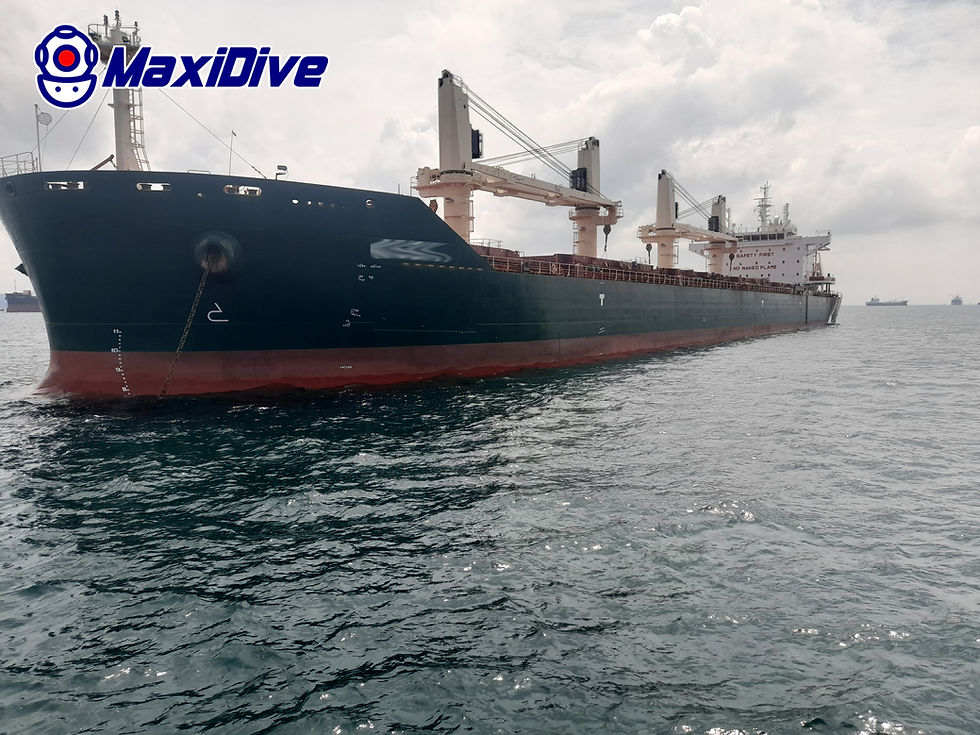
MaxiDive Co., Ltd. completed an offline hull inspection Koh Si Chang project for a commercial vessel at Koh Si Chang Anchorage, Thailand. The inspection was carried out to document the underwater condition of the vessel’s hull plating, appendages, propeller assemblies, rudder system, gratings, anodes, transducer, discharge openings, and related underwater components.
The operation was performed under calm sea conditions with good underwater visibility for inspection work. MaxiDive’s diving team used underwater photographic and video documentation equipment, including Olympus Tough TG7, GoPro 11, and standard commercial diving equipment.
This type of offline hull inspection allows shipowners, vessel managers, and technical departments to verify underwater condition without dry docking, supporting maintenance planning, operational review, and technical decision-making.

Offline Hull Inspection Koh Si Chang Scope
The offline hull inspection Koh Si Chang scope included a structured underwater condition assessment of key vessel areas. The inspection covered the hull plating, flat bottom, vertical side shell plating, bilge keels, appendages, gratings, discharges, propeller assemblies, rope guard, stern shaft area, rudder assembly, inspection window, and anodes.
The inspection focused on identifying:
marine growth condition;
coating and steel condition;
visible damage or structural anomalies;
weld seam condition;
blockage or movement of gratings;
propeller blade condition;
rope guard entanglement;
stern shaft plug condition;
rudder and anode condition.
Underwater inspection services are a core part of MaxiDive’s commercial diving scope in Thailand, supporting vessel condition assessment, photographic documentation, and class/technical review requirements.

Hull Plating Inspection Findings
The hull plating inspection showed that the paint coating and steel condition on the vertical side were in excellent condition and free from marine fouling. The flat bottom was also reported in excellent condition and free from grounding evidence.
Some marine fouling was observed around dry-docking block mark areas, which is commonly documented during hull condition inspections to support future maintenance planning. The bilge keels were found free from damage and abnormalities, with bilge keel anodes observed with approximately 10% depletion.
No concave weld seams were noted, and no damage or structural anomalies were reported in the inspected hull plating areas.
Appendage and Grating Inspection
The appendage inspection confirmed that the transducer was secure in place, with no visible damage or abnormalities identified.
The gratings for the inspected sea chest / suction areas were found secure, fastened in place, without movement, and free from blockage. The overall discharge openings were also found free from blockage.
No concave weld seams were noted, and no damage or abnormalities were identified in the inspected appendage areas. These findings support the vessel’s technical team with confirmation that key underwater openings and appendages were secure and operationally clear at the time of inspection.
Propeller Assembly Inspection and Roughness Assessment
The propeller assembly inspection included the propeller blades, boss, rope guard, stern shaft plug, and related stern area components.
The stern shaft plug was found secure in place, with no leakage identified. The rope guard was free from entanglement, and no abnormalities were noted. The propeller blade surface was inspected for cavitation, contact damage, cracking, and visible outline damage.
No evidence of cavitation, contact damage, or cracks was observed. The propeller blade was assessed to be in good condition, while the surface roughness was recorded as “E” on the Rupert Scale. The boss cap was also found secure in place.
Propeller roughness assessment is important because surface condition can affect vessel efficiency, fuel performance, and propulsion quality. MaxiDive’s propeller service scope includes inspection, polishing, photographic reporting, and surface condition assessment for commercial vessels operating in Thailand.
Rudder Assembly Inspection
The rudder assembly inspection confirmed that the inspection window was secure in place on the starboard side of the rudder. Rudder anodes were inspected and found secure, with approximately 10% depletion.
The overall paint coating and steel condition of the rudder were reported in excellent condition, with no evidence of abnormalities. The rudder was found completely clean and free from marine fouling.
No concave weld seams were noted, and no damage or structural anomalies were reported in the inspected rudder areas.
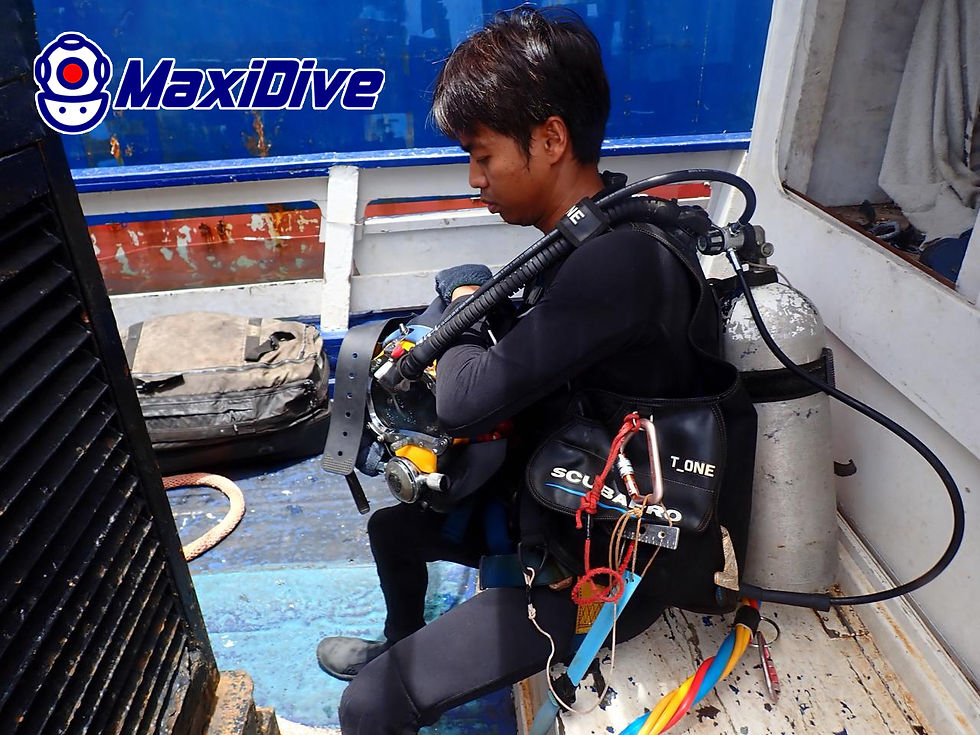
Commercial Diving Support at Koh Si Chang Anchorage
Koh Si Chang Anchorage is one of Thailand’s key operational areas for commercial vessels requiring underwater inspection, hull condition assessment, propeller services, and technical support without dry docking.
MaxiDive provides underwater inspections, in-water surveys, hull cleaning, propeller polishing, emergency underwater repair, and class-related commercial diving services across Thailand’s major ports and anchorages. With 2,111 completed projects, 964 clients, 21 locations, and 5 diving units, MaxiDive supports shipowners, managers, class representatives, and technical departments with structured underwater inspection and reporting.
Conclusion
MaxiDive successfully completed the offline hull inspection Koh Si Chang project, documenting the underwater condition of the vessel’s hull plating, appendages, gratings, transducer, discharges, propeller assemblies, rope guard, stern shaft plug, rudder assembly, inspection window, and anodes.
The inspection confirmed that the main underwater areas were in good condition, with no reported structural anomalies. Hull plating, appendages, gratings, rudder components, and propeller assemblies were documented for technical review, while the propeller surface roughness was recorded as Rupert Scale “E” for maintenance planning.


Comments